

By: Jess Quazi, Director of Care Management
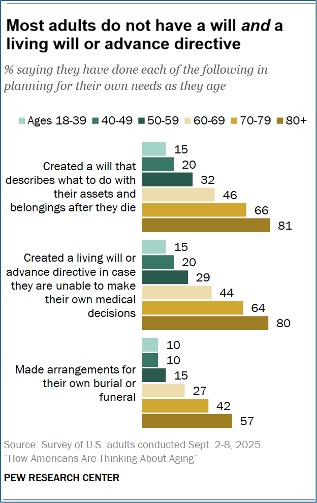
Three out of ten adults in the U.S. do not have an end-of-life plan. Most of us know it’s important, but getting it done can feel impossible. Preparing now means your loved ones and/or care team will know how to navigate the decision-making process if a crisis occurs.
Conversations around mortality aren’t at the top of the list for many of us. We don’t want to upset others, or we find the topic uncomfortable or scary. Others want to talk about it “later” or try to have faith that things will just work out.
The truth is, this topic might upset others, and we may be afraid, but we cannot assume our circumstances will just work out without thoughtful planning.
It’s okay to be afraid, and it’s okay to discuss difficult topics like the end of life. Surprisingly, having these conversations can be freeing, not only for the person discussing their own wishes, but also for those responsible for their care. While penciling a crisis into the calendar isn’t possible, you can make a plan to complete your end-of-life documentation anytime.
Disclaimer: The following content is for informational purposes and is not legal advice. Laws vary by state, so please consult a licensed attorney as you navigate this process.
What approach is right for me for end-of-life planning?
End-of-life planning looks different for everyone, so it’s important to know your options as you put pen to paper (or fingertips to keyboard). Let’s talk about the basics.
Living Will
A document that clearly outlines your healthcare wishes if you become incapacitated. A basic Living Will states your preferences on the life-saving interventions you do and do not wish to receive.
Examples include:
- Artificial nutrition/hydration
- Intubation
- Pain management
- Resuscitation measures
Living Wills can also include nuanced requests related to your spirituality, bodily autonomy, hospice, messages to family, permission for visitors, memorial services, etc.
Advance Directive
A broad term for the collection of documents related to your medical care if you become unable to make decisions independently. This typically includes a Living Will and naming a trusted healthcare proxy (also called an agent, surrogate, representative, or, in some cases, a medical Power of Attorney). Your proxy works closely with your care team to make healthcare decisions on your behalf.
Power of Attorney (POA)
A document that grants permission to an individual, individuals, or organization to manage your financial and/or medical care.
There are different types of POAs:
- Durable
- General
- Limited
- Springing (also called Conditional)
- And more…
These documents are revocable and customizable to meet your specific needs.
Note: Without a POA, a conservator could be court-ordered to manage your medical and/or financial matters if you become incapacitated. While conservatorships do have benefits, they can also be costly and complex for you and your loved ones.
Last Will and Testament
Commonly referred to as a “will.” This document lists how you want your assets to be distributed after your death. Your collective assets are referred to as your “estate.”
Elements of an estate might include:
- Bank account balances
- Cash
- Contents of a safe deposit box
- Digital footprint (including the use of artificial intelligence to replicate your likeness)
- Investment balances
- Material possessions
- Pets
- Real estate
While it is not required to name an “executor” (or executors) in your will, it is something to seriously consider. An executor is a trusted person who oversees and coordinates the disbursement of all your assets to the proper recipients.
My End-of-Life Planning Documents are Complete. Now What?
Make sure all documents are easily accessible.
Keep the original signed documents in an easy-to-find place in case of an emergency. Tell your loved ones and care team where they are and give copies to anyone who might need them.
This could include your:
- Doctors
- Family
- Healthcare proxy
- Hospitals in your vicinity
- Power of Attorney
- Spiritual leaders
What matters most is that the people you trust feel empowered to advocate for you, how you want, when the time comes.
For Middle Tennesseans 50 and older, contact FiftyForward to create your end-of-life plan and access resources to support you in living a longer, more fulfilling life. For all others, contact a legal aid organization, healthcare provider, licensed attorney, or your local Area Agency on Aging.